
Subtitle Timing: Align Every Line to the Timeline, with Batch Processing and AI Calibration
Date Published

You have a translated bilingual draft or a cleaned-up voiceover transcript—writing the subtitles is not the hard part. Making each line appear at exactly the right moment is: dragging cues into place one by one turns a few minutes of video into half an hour of work. Subtitle Timing hands this to the timeline tools: drag each line into alignment for precision, or let AI calibrate the timing points against the speech—line by line, subtitles never run early or lag behind.
사용 방법
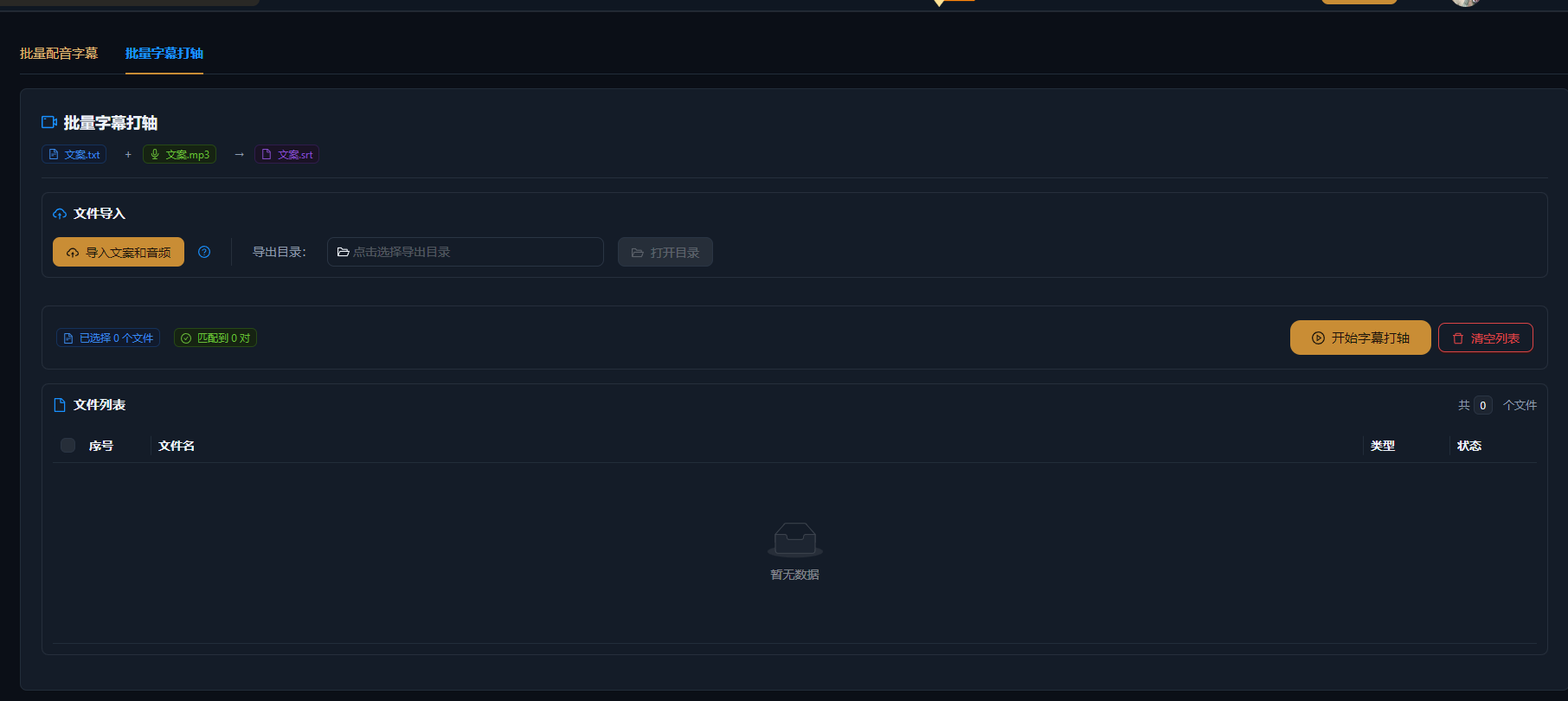
Import the video and subtitle text
Bring the video and subtitle draft into Subtitle Timing together: paste your own text or use the results from Text Extraction. Multiple videos can be imported in batch, with one task handling the whole set.
Timing and AI calibration
Drag subtitles into place on the timeline line by line; with AI calibration on, the system matches the in and out points of every subtitle line to the speech automatically—long sentences and fast talkers still land precisely, and the odd deviation just needs a manual nudge.
Review and export
Preview the sync between subtitles and speech line by line, fine-tune individual time points, and export; the finished subtitles can continue into Super Edit for more work, or export together with the finished video.
실제 사례
아래 5개의 스크립트는 AIMIX "AI 스크립트 생성"의 실제 결과입니다. 각 사례에 표기된 영상 설명을 입력해 생성했으며, 스토리보드 표는 수정 없이 그대로 옮겼고 길이는 생성값입니다. 화면 설명이 생성되지 않은 장면은 "—"로 표시했습니다.
Bilingual subtitles: put translated drafts without timestamps on the timeline
Best for: multi-language versions of talking-head videos and courses · translated drafts needing line-by-line alignment
Workflow: source video + translated subtitle draft → AI calibration times each line → fine-tune and export bilingual subtitles
Timestamp-free drafts still get timed fast · AI calibrates in and out points from the speech · Batch-process a whole set of translated videos
Send the voiceover script out for translation and you get back plain text with no timestamps—the last mile of bilingual subtitles is all timing. Import the videos and translated drafts in batch into Subtitle Timing, let AI calibrate each line against the speech, spot-check manually, and bilingual subtitles for dozens of videos are done in half a day.
When you need Subtitle Timing
Subtitle Generation handles the transcription; Subtitle Timing handles the alignment:
P
u
S
p
B
a
If the video has no transcript yet, run Text Extraction first to get the script, then move into timing for alignment—the two steps chain together smoothly.
편집 결과의 주도권 유지
Precise line-by-line alignment
Subtitles follow the speech—never early, never late—matching the polish of professional releases.
AI calibration saves time
No dragging cue by cue—AI calibrates the in and out points from the speech, and you only fine-tune the exceptions.
Batch-process entire sets
Multiple videos get timed in one task, rolling out subtitles in bulk for account matrices and multi-language versions.
자주 묻는 질문
What is the difference between Subtitle Timing and Subtitle Generation?
Subtitle Generation transcribes subtitles from speech; Subtitle Timing aligns subtitle text you already have to the timeline line by line—it solves the alignment problem.
Does AI calibration cost points?
AI calibration uses AI analysis and consumes points per task, as shown in the app; purely manual timing costs nothing.
How accurate is AI calibration?
Clear spoken content like talking-head videos and courses reaches high accuracy; when fast speech or long sentences drift, a manual nudge on individual points fixes it.
How many videos can one batch handle?
Batch tasks are supported; the exact limit follows the app. Keep each batch within a size you can spot-check and work through batch by batch.
Can the finished subtitles be exported?
Yes. Timing results export with the video or continue into Super Edit, pairing with translation to produce bilingual subtitles.
Which subtitle formats are supported?
Common subtitle formats are supported for import and export; see the app for the full list—pasting plain text onto the timeline works too.