
Choose a dedup mode
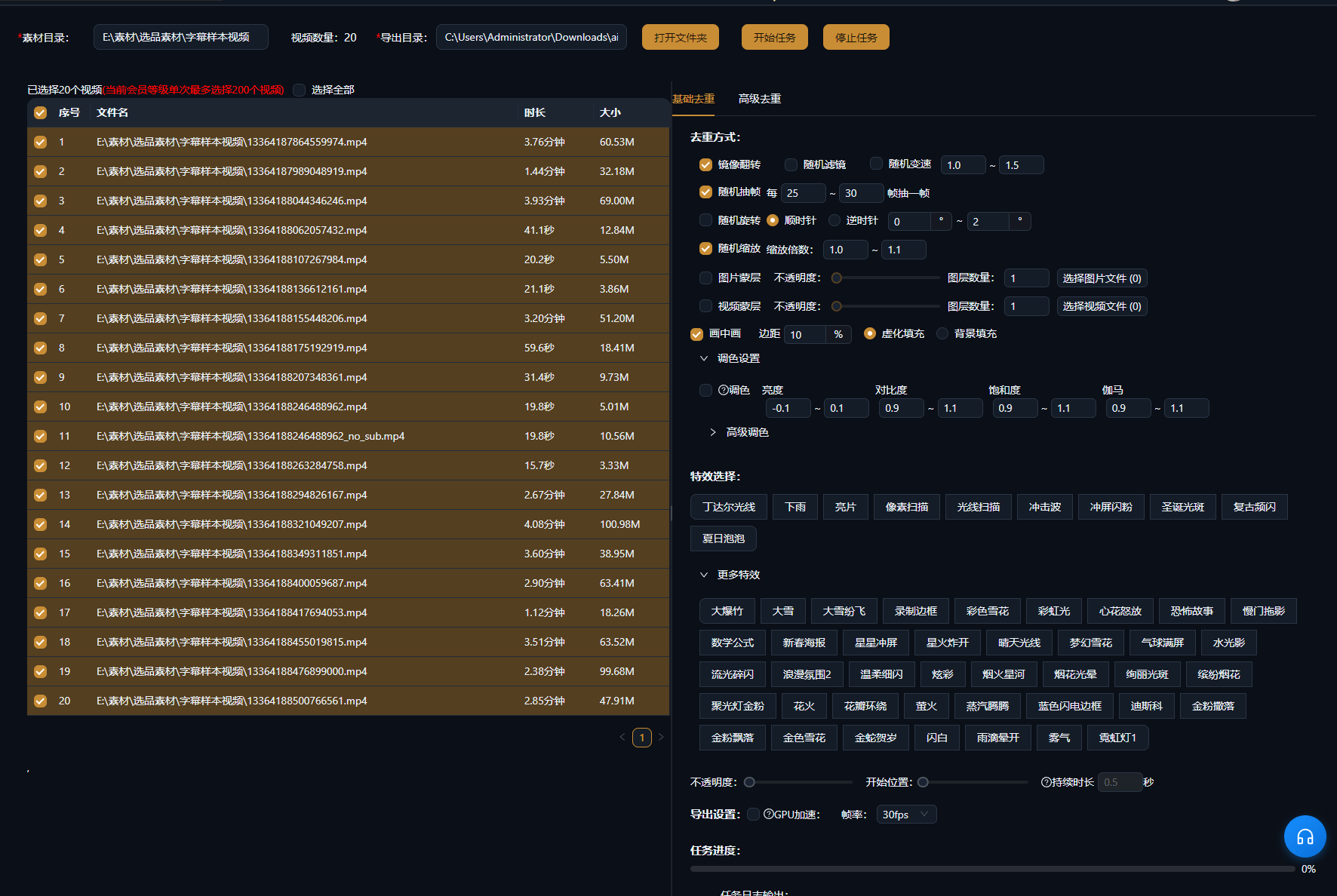
Basic dedup: alters visual parameters (mirror, crop, tone, frame rate, and more). Advanced dedup: deeply rebuilds the video frames for stronger deduplication.
Fission your footage by altering visual elements across multiple dimensions: Basic dedup changes visual parameters, while Advanced dedup deeply rebuilds the video. Batch export auto-deduplicates to reduce repeated combinations. Ideal for content matrices and mass distribution.
تنزيل AIMIXThe biggest fear in running a content matrix is "posting a hundred videos and having the platform flag them all as the same one." Video Deduplication alters video characteristics across multiple dimensions—from visual parameters to deep content—so one piece of footage can multiply into multiple versions the platform won’t flag as duplicates, working hand in hand with batch mixing’s auto-deduplication.
Basic dedup: alters visual parameters (mirror, crop, tone, frame rate, and more). Advanced dedup: deeply rebuilds the video frames for stronger deduplication.
Choose which visual dimensions to change and how strongly. Basic mode lets you combine multiple parameters; Advanced mode rebuilds deeply in one click.
Process a single clip or use it with batch mixing—exports are deduplicated automatically, ensuring every version combination differs enough.
النصوص الخمسة التالية نتائج فعلية من ميزة إنشاء النصوص بالذكاء الاصطناعي في AIMIX، وُلِّدت بالمواصفة الموضحة في كل مثال. أُنشئت بالصينية؛ والجداول مترجمة دون تعديل، والمدد كما وُلِّدت. المشهد الذي لم تُولَّد له صورة وصفية مُعلَّم بـ «—».
Best for: multi-platform distribution · one piece of footage that needs many non-duplicate versions
结构Workflow: source footage → multi-dimensional dedup → batch export with auto-dedup
The core question of a content matrix isn’t "can I make a hundred videos"—it’s "will those hundred get flagged as duplicates." Video Deduplication gives every video enough distinct visual characteristics, and combined with batch mixing’s combination-level dedup, it greatly reduces the risk of platforms judging your videos as duplicates.
The two modes suit different scenarios:
| Mode | How it works | Best for |
|---|---|---|
| Basic dedup | Changes visual parameters across dimensions (mirror/crop/tone, etc.) | Light dedup, fast processing of large volumes |
| Advanced dedup | Deeply rebuilds video frame content | Heavy dedup, for strict platform reviews |
We recommend testing Basic dedup first to see how the platform reacts, then upgrading to Advanced if results fall short.
Not just slapping on a filter—mirror, crop, tone, and deep rebuild independently alter visual characteristics across dimensions.
Batch mixing exports automatically filter duplicate combinations, reducing similarity between versions.
Basic dedup when that is enough—no waste; Advanced dedup for strict reviews.
Dedup is a built-in capability of batch mixing—no separate pass needed.
No guarantee. Dedup reduces the risk of being flagged as duplicate; platform review standards keep changing, so combine it with content differentiation.
Advanced dedup rebuilds frames deeply for bigger changes; actual results depend on your footage and the platform’s algorithm—testing first is recommended.
Basic dedup has minimal impact on quality; Advanced dedup may cause slight changes due to rebuilding—test with short clips first.
No. Batch mixing exports have auto-deduplication built in, reducing duplicates at the combination level.